Promotional product industry: a powerful economic force


Published on 15.09.2026
Study puts global economic footprint at 406.2 billion euros
Just how significant is the promotional products industry’s economic impact? A study commissioned by the Promotional Products Association International (PPAI) and carried out by Oxford Economics provides a global answer to this question for the first time. The GWW supported the study as the German partner. The following information is based on a GWW press release dated 8 September 2026.
According to the study, the global promotional products ecosystem contributed a total of 406.2 billion euros to economic output, or global gross domestic product, in 2025. The analysis took into account not only production and finishing, but also procurement, distribution, retail, e-commerce, fulfilment, as well as marketing and brand activation. Customers worldwide spent 290.9 billion euros on personalised products. Of this, 93.4 billion euros was accounted for by tactile advertising.
Germany among the international frontrunners
The German market, too, is proving to be a significant economic factor. According to the study, expenditure on personalised products amounted to 12.4 billion euros. Of this, 5.5 billion euros was spent on haptic advertising and 6.9 billion euros on merchandising, licensed and personalised products.
Overall, the sector thus contributes €14.9 billion to German GDP and secures around 171,000 jobs. This places Germany fourth in a global comparison. The sector also makes a significant contribution to tax revenue: €6.3 billion in taxes are attributed to it.
A new perspective on the market
The figure for market expenditure, which is significantly higher than the B2B sector turnover of 3.16 billion euros previously reported by the GWW, is primarily due to the more comprehensive scope of the analysis. Oxford Economics additionally takes into account, amongst other things, personalised products from e-commerce channels, as well as direct purchases and imports from manufacturers and suppliers.
For GWW Managing Director Ralf Uwe Scheider, the results underscore the sector’s economic significance. He also links the figures to a call for less bureaucracy and clear tax treatment in order to further promote growth and employment in Germany.
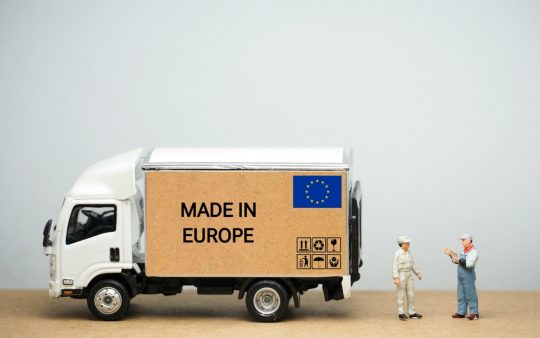
Image: Adobe Stock – Garun Studios
More articles